The Noose Never Left: Racial Terror Symbols in Modern America and the Courts That Look Away
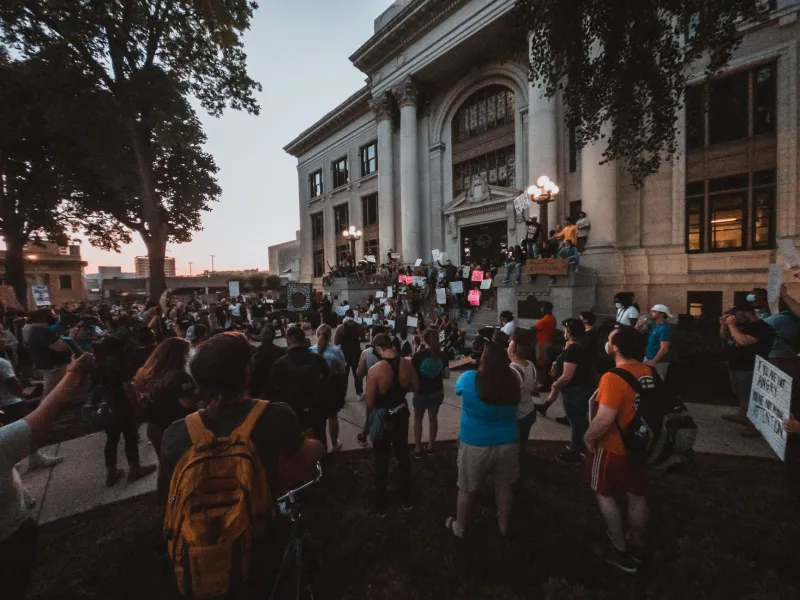
In September 2006, the small town of Jena, Louisiana became the unlikely epicenter of a national reckoning with racial intimidation. When white students hung nooses from an oak tree on the grounds of Jena High School — a direct and menacing response to Black students who had dared to sit beneath its shade — the incident ignited protests that drew tens of thousands of demonstrators into the streets. The school board called it a prank. The district attorney called it a youthful indiscretion. The Black community of Jena, and millions of Americans watching from afar, recognized it for what it was: a declaration of racial terror, delivered in the language of lynching.
Nearly two decades later, that language is still being spoken — and our courts are still struggling to respond.
A Symbol Rooted in the History of Mass Violence
To understand why the noose carries such devastating weight, one must understand what it represents in the American historical imagination. Between 1877 and 1950, more than 4,000 Black Americans were lynched across the Southern United States, according to the Equal Justice Initiative's comprehensive research. These were not random acts of violence. They were public spectacles, often attended by crowds, designed to enforce racial hierarchy through terror and collective trauma.
When a noose appears today — whether hanging from a construction crane, left on a Black employee's desk, or strung from a tree outside a historically Black college — it does not arrive without context. It arrives carrying the full weight of that history. It says, in unmistakable terms: You are not safe here. You do not belong here. This is what we are capable of doing to you.
This is not hyperbole. It is the documented psychological reality experienced by victims, as affirmed by trauma researchers, civil rights attorneys, and the survivors themselves.
The Legal Gap Between Terror and Accountability
Despite this reality, American law has repeatedly failed to treat noose displays with the gravity they deserve. The federal Matthew Shepard and James Byrd Jr. Hate Crimes Prevention Act, signed into law in 2009, expanded federal jurisdiction over bias-motivated crimes. Yet its application to noose incidents has been inconsistent at best, and negligible at worst.
Consider the pattern: In 2017, a Black Snapchat employee discovered a noose at the company's Santa Monica office. Federal investigators opened an inquiry, but no charges were filed. That same year, nooses were found at construction sites in Washington, D.C., where a federally funded project was underway — a detail that theoretically placed the incidents within federal purview. Investigators struggled to identify perpetrators, and prosecutions did not follow. In 2019, a noose was found hanging in the garage of NASCAR's Talladega Superspeedway, assigned to Black driver Bubba Wallace. The FBI ultimately concluded it had been there since 2019 as a garage pull — a conclusion that satisfied few and left the broader question of accountability entirely unresolved.
The recurring outcome is a familiar one to advocates for criminal justice reform: investigation without prosecution, concern without consequence, and victims left to absorb the psychological damage without legal vindication.
Why Prosecutors Decline to Act
Legal scholars and civil rights attorneys point to several structural reasons why hate crime charges in noose cases are rarely pursued. First, proving intent beyond a reasonable doubt is notoriously difficult. Defense attorneys frequently argue that a noose was placed without racial motivation — as a crude joke, as a coincidental knot, or as simple ignorance. Prosecutors, wary of losing high-profile cases, often decline to charge rather than risk acquittal.
Second, many states lack hate crime statutes robust enough to cover intimidation through symbols alone, particularly when no direct physical threat is made. The gap between implicit racial terror and explicit criminal threat creates a legal gray zone that perpetrators exploit and prosecutors navigate cautiously.
Third, and perhaps most critically, there is the enduring problem of institutional reluctance. Law enforcement agencies — many of which carry their own fraught histories with communities of color — have not always prioritized the aggressive investigation and prosecution of racially motivated intimidation. Without that institutional will, even the strongest statutes remain dormant.
The Jena Legacy and the Ongoing Struggle
What the Jena 6 case demonstrated, with painful clarity, is that the failure to take racial intimidation seriously does not neutralize the harm — it compounds it. When those nooses were dismissed as a prank in 2006, the message received by Black students was unambiguous: the institution charged with their education did not consider their safety a priority. The disproportionate criminal charges subsequently leveled against the six Black students who responded to months of escalating racial hostility only deepened that wound.
This is the insidious dynamic that advocates at Free The Jena 6 have long sought to illuminate. Racial terror, when left unaddressed by legal institutions, does not dissipate. It metastasizes. It emboldens those who deploy it and demoralizes those forced to endure it.
Grassroots organizations across the country have continued to apply pressure on legislators to strengthen hate crime enforcement. The NAACP, the Lawyers' Committee for Civil Rights Under Law, and numerous community-based coalitions have called for mandatory federal review of all noose-related incidents, enhanced prosecutorial training on hate crime statutes, and the establishment of clear legal standards defining racially intimidating symbols as criminal conduct under federal law.
What Must Change
The path forward requires action on multiple fronts. Legislatively, Congress must revisit and strengthen the Hate Crimes Prevention Act to explicitly address symbolic racial intimidation, closing the interpretive loopholes that allow prosecutors to sidestep accountability. The Department of Justice must establish dedicated investigative resources for bias-motivated intimidation cases and publish transparent data on how noose incidents are classified, investigated, and resolved — or not.
At the state level, advocates must push for hate crime statutes that recognize the documented psychological harm caused by racial terror symbols, treating them with the legal seriousness afforded to other forms of criminal intimidation. Victim impact must be centered in these legislative conversations, not minimized by those who would reduce a noose to a mere object rather than a message.
And culturally, we must refuse to accept the normalization of these incidents. Each time a noose is dismissed as a misunderstanding or a prank, we collectively rehearse the same failure that played out in Jena in 2006. Each dismissal teaches perpetrators that the cost of racial terror is negligible and teaches victims that the legal system was never truly built to protect them.
The Demand for Accountability
At Free The Jena 6, we believe that justice delayed is justice denied — and that justice perpetually deferred is justice that was never genuinely offered. The young men of Jena faced the full, punishing weight of a criminal justice system that moved with extraordinary speed to prosecute them while declining to take seriously the racial terror that preceded and provoked their actions. That imbalance was not an anomaly. It was a reflection of structural priorities that persist today.
The noose did not disappear after 2006. It reappeared in warehouses, on college campuses, in corporate offices, and on public streets. It will continue to reappear as long as those who deploy it understand that the legal consequences will remain minimal.
Demand better from your federal representatives. Support organizations working to strengthen hate crime enforcement. Refuse to accept the framing that treats racial terror as a matter of interpretation rather than a matter of law. The struggle that brought hundreds of thousands to Jena in 2007 is not a chapter of history. It is an ongoing imperative.