Caged Before Conviction: How America's Bail System Punishes Poverty Long Before a Jury Speaks
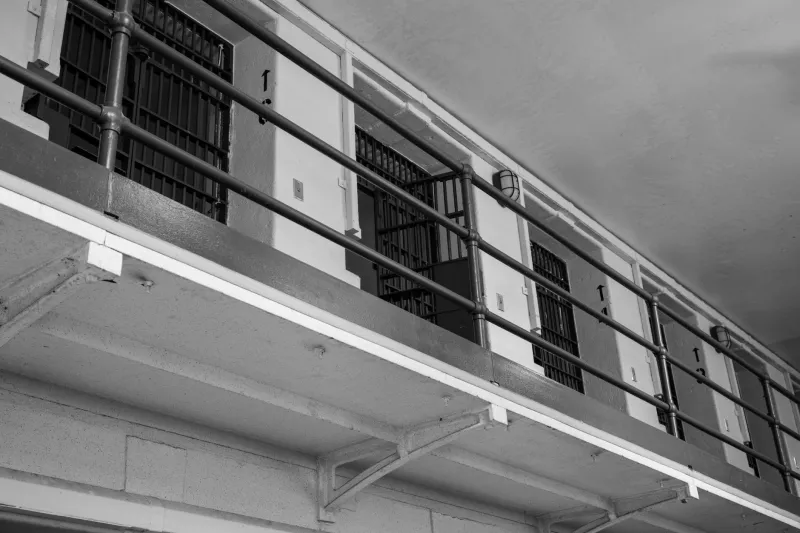
On any given day in the United States, nearly half a million people are confined in local jails despite not having been convicted of any crime. They are not awaiting sentencing. They are not serving a punishment handed down by a jury of their peers. They are waiting — waiting for a trial date, waiting for an overworked public defender to return a phone call, waiting for a system that has already rendered its quiet, unofficial verdict: if you cannot pay, you do not belong free.
The machinery responsible for this mass pretrial confinement is the commercial bail system, a uniquely American institution that converts the constitutional presumption of innocence into a financial transaction. In most countries, judges weigh whether a defendant poses a genuine flight risk or a danger to the community. In the United States, that determination is frequently reduced to a number on a bail schedule — a predetermined dollar figure attached to a charge, applied with minimal judicial discretion, and utterly indifferent to what a defendant actually earns or owns.
A Schedule Built for Punishment, Not Protection
Bail schedules were originally conceived as administrative tools to streamline the release process for low-level offenses. In practice, they have metastasized into blunt instruments that impose identical financial burdens on defendants with radically different economic circumstances. A $10,000 bail set for a misdemeanor charge is a minor inconvenience for a middle-class defendant and an insurmountable wall for someone earning minimum wage.
For those who cannot post the full amount, the alternative is a commercial bail bondsman — an industry that extracts a nonrefundable premium, typically ten percent of the total bail, in exchange for posting bond. That fee is not returned if the defendant is acquitted. It is not credited toward any fine. It is simply gone, extracted from families already stretched to breaking, lining the pockets of a for-profit industry that lobbies aggressively to preserve the very system that sustains it.
The result is a two-tiered system of pretrial liberty. Wealth purchases freedom. Poverty purchases a jail cell.
What Pretrial Detention Actually Costs
The human cost of pretrial detention extends far beyond the jail cell itself. Researchers have documented, with grim consistency, that even short periods of pretrial incarceration produce cascading consequences that can permanently alter the trajectory of a person's life.
Employment is typically the first casualty. A worker who fails to appear for a shift — because they are in a holding facility, not because they chose to be absent — is terminated. In industries without paid leave or union protections, even a week of pretrial detention can mean permanent job loss. For those in gig-economy roles, the disruption is immediate and irreversible.
Housing follows. Missed rent payments trigger eviction proceedings. Landlords are not obligated to hold units for tenants who cannot pay, and many have explicit lease provisions that allow termination upon arrest — not conviction, but arrest. Families are displaced. Children are uprooted from schools. In cities where affordable housing waitlists stretch for years, a single eviction can set a family back by a decade.
Perhaps most devastating is the impact on child custody. Parents held in pretrial detention frequently miss family court hearings, which can be interpreted by judges as abandonment or disengagement. Child protective services may initiate proceedings. In some documented cases, pretrial detention has contributed directly to the termination of parental rights — a permanent legal severing of the parent-child relationship, imposed not as a sentence for a crime but as a consequence of an inability to post bail.
Real People, Real Losses
Kalief Browder's name has become synonymous with the catastrophic failure of pretrial detention. Arrested in New York City at sixteen on a charge of stealing a backpack — a charge he consistently denied — Browder spent nearly three years on Rikers Island because his family could not post $3,000 bail. He endured prolonged solitary confinement and repeated violence. The charges were eventually dismissed. Browder was released, but the damage was irreparable. He died by suicide two years after his release, at twenty-two years old.
Browder's case is exceptional in its visibility, not in its structure. Across the country, in county jails and municipal lockups that rarely attract national attention, the same machinery grinds forward. People lose jobs, homes, and children while awaiting trials that may conclude with acquittals or dismissals. The system does not compensate them. It does not apologize. It simply moves on to the next defendant.
The racial dimensions of this crisis are impossible to separate from its economic dimensions. Black and Latino defendants are consistently assigned higher bail amounts than white defendants charged with comparable offenses, a disparity documented in jurisdictions from New Jersey to California. They are also, by virtually every economic measure, less likely to be able to meet those amounts. The pretrial detention system thus functions as a mechanism that translates racial bias in bail-setting into disproportionate confinement of people of color — a contemporary echo of the criminalization patterns this publication has long documented.
Reform on the Horizon — and the Forces Pushing Back
A growing coalition of advocates, public defenders, and reform-minded legislators has begun to challenge the foundational assumptions of the commercial bail system. New Jersey enacted sweeping bail reform in 2017, shifting to a risk-assessment model that dramatically reduced pretrial detention rates without producing the surge in crime that opponents predicted. Illinois became the first state to abolish cash bail entirely under the Pretrial Fairness Act, a provision of the SAFE-T Act that took effect in 2023 after protracted legal challenges.
These reforms represent genuine progress. They also face fierce resistance from the commercial bail industry, from prosecutors who have grown accustomed to using pretrial detention as leverage in plea negotiations, and from politicians who have learned that appearing "tough on crime" is easier than explaining the constitutional implications of jailing people for being poor.
The plea negotiation dynamic deserves particular emphasis. Prosecutors have long understood that defendants held in pretrial detention are under enormous pressure to accept plea deals, even when those deals are unjust. A person who has already lost their job and is watching their family's housing situation deteriorate is far more likely to plead guilty to a lesser charge — to end the immediate crisis — than to insist on a trial that may be months away. The bail system, in this respect, does not merely punish defendants before conviction. It coerces them into convictions that might never have occurred had they been free.
The Presumption That Must Be Reclaimed
The Sixth Amendment guarantees the right to a speedy trial. The Eighth Amendment prohibits excessive bail. The Fifth and Fourteenth Amendments promise due process. These are not aspirational sentiments. They are constitutional commitments that the pretrial detention system violates, routinely and systematically, against the people least equipped to challenge those violations in court.
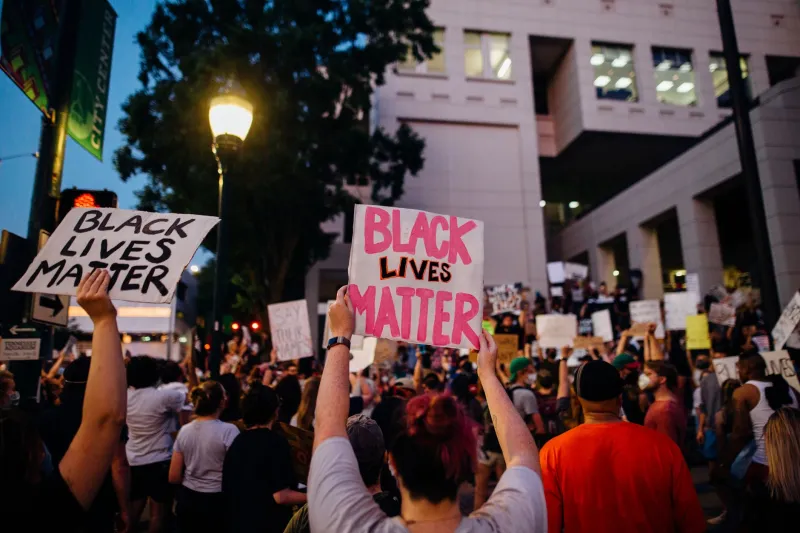
The movement for criminal justice reform cannot afford to treat bail as a secondary issue — a procedural technicality overshadowed by the more visible crises of mass incarceration and police violence. The bail trap is where many of those larger crises begin. It is where innocence is punished and poverty is criminalized before a single witness has testified or a single piece of evidence has been weighed.
Freedom before conviction is not a privilege to be purchased. It is a right that must be defended — for every defendant, in every jurisdiction, regardless of what they earn or where they live. Until that principle is translated into policy, the promise of equal justice will remain precisely that: a promise, deferred indefinitely, to those who can least afford to wait.