Guilty Until Proven Broke: How the Plea Bargain Industrial Complex Devours the Innocent

Across America, thousands of innocent people sign their names to confessions they never should have made — not because they are guilty, but because they are poor. The plea bargain system, long celebrated as a mechanism of judicial efficiency, has metastasized into a coercive machinery that preys upon economic desperation, inadequate counsel, and the terrifying arithmetic of risk that confronts every defendant who cannot afford to fight. For Black Americans and juveniles in particular, this machinery operates with a ruthlessness that the comfortable and the privileged rarely glimpse.
The Jena 6 case illuminated many faces of a broken criminal justice system, but perhaps none more insidious than this: the moment when a young person, frightened and financially exhausted, is handed a pen and told that signing away years of their life is the rational choice. That moment is not justice. It is surrender manufactured by design.
The Arithmetic of Fear
To understand why innocent people plead guilty, one must first understand the calculus of terror the system imposes. A defendant charged with a serious felony faces a binary that is almost never truly binary. On one side: accept a plea deal, admit guilt, receive a reduced sentence — perhaps probation, perhaps two years rather than twenty. On the other side: exercise the constitutional right to trial, trust in a public defender who carries a caseload that would overwhelm three attorneys, and risk a sentence that could consume the entirety of one's productive life if the jury returns the wrong verdict.
For a middle-class defendant with resources, this is a difficult choice. For a working-class Black teenager from a rural parish or an urban zip code historically starved of investment, it is no choice at all. The pressure is not subtle. Prosecutors openly refer to the gap between plea offers and trial sentences as the "trial penalty" — a euphemism that sanitizes what is, in practice, a punishment for the audacity of maintaining one's innocence.
Research published by the National Association of Criminal Defense Lawyers found that defendants who reject plea deals and proceed to trial receive sentences that are, on average, three times longer than those offered in plea negotiations. For a young person staring down that disparity, the rational calculation and the just calculation are two entirely different things.
Public Defenders and the Myth of Adequate Counsel
The Sixth Amendment guarantees every defendant the right to counsel. What it does not guarantee — and what the system has never meaningfully provided — is the right to effective counsel. Public defenders in this country are, by and large, committed professionals operating under conditions that make genuine advocacy nearly impossible.
In Louisiana, the state where the Jena 6 case unfolded and a state that has long exemplified the failures of indigent defense, public defenders have carried caseloads exceeding 400 felony cases per attorney per year. The American Bar Association recommends a maximum of 150. The arithmetic is damning: a public defender with 400 cases and a standard working year has, on average, less than five hours to devote to each client — including research, investigation, court appearances, and client communication.
In this environment, the plea bargain becomes not merely an option but an institutional survival mechanism. Defenders who might otherwise investigate alibi witnesses, challenge forensic evidence, or file suppression motions are instead forced to triage. Cases that might be won at trial are settled because the resources to win them simply do not exist. And when a defender sits across from a frightened seventeen-year-old and explains, with genuine sorrow, that the odds at trial are not favorable, that conversation is shaped as much by the defender's crushing caseload as by the actual merits of the case.
Children in the Crosshairs
The coercive dynamics of plea bargaining are amplified exponentially when the defendant is a minor. Juvenile defendants lack the cognitive and emotional development to fully comprehend the long-term consequences of a guilty plea. Research in developmental neuroscience confirms that adolescents are particularly susceptible to decisions driven by immediate threat reduction — precisely the psychological state prosecutors exploit when offering a plea deal that promises to end the immediate nightmare of detention and uncertainty.
A 2021 study by the Juvenile Law Center found that a substantial proportion of youth who accepted plea deals in adult court did not fully understand that their plea would result in a permanent adult criminal record. Many believed the record would be sealed upon reaching adulthood. It is not. That record follows them to every job application, every housing inquiry, every professional licensing board. The sentence may end; the punishment does not.
For Black youth, this dynamic intersects with documented racial disparities at every stage of the process. Black juveniles are more likely to be charged as adults, more likely to be detained pretrial — which itself dramatically increases the likelihood of a guilty plea — and more likely to face prosecutors who pursue maximum charges as an opening gambit in a negotiation that the defendant never agreed to enter.
The Efficiency Incentive and Its Human Cost
Perhaps the most troubling dimension of the plea bargain crisis is that it is not a system malfunction. It is the system functioning exactly as its institutional incentives demand. Prosecutors are evaluated, promoted, and politically rewarded based on conviction rates. Courts manage dockets under pressure to minimize delay. Public defender offices survive on budgets that presuppose high plea rates. The entire architecture of American criminal adjudication has been quietly reengineered around the assumption that ninety-seven percent of cases will never reach a jury.
When a system is designed for efficiency rather than truth, innocence becomes an inefficiency. The innocent defendant who insists on trial consumes resources, delays docket clearance, and challenges the metrics by which the system measures its own success. The pressure applied to that defendant — through bail conditions, pretrial detention, charging decisions, and plea offers — is not incidental. It is structural.
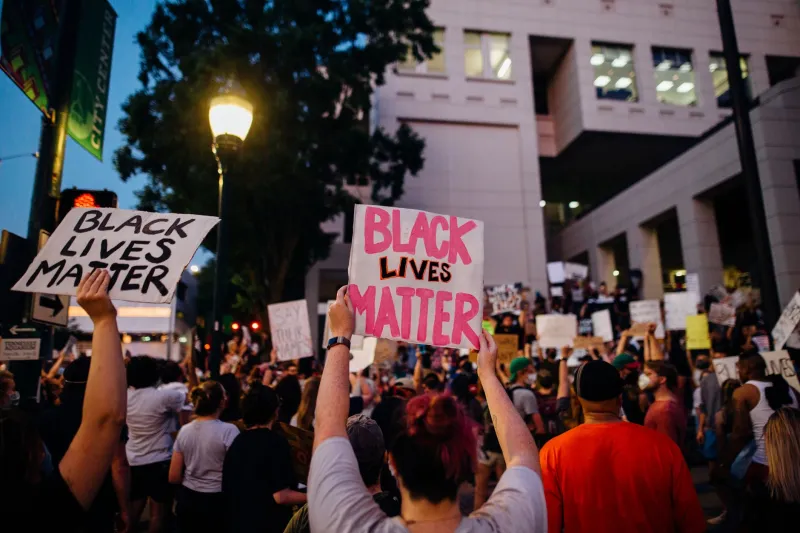
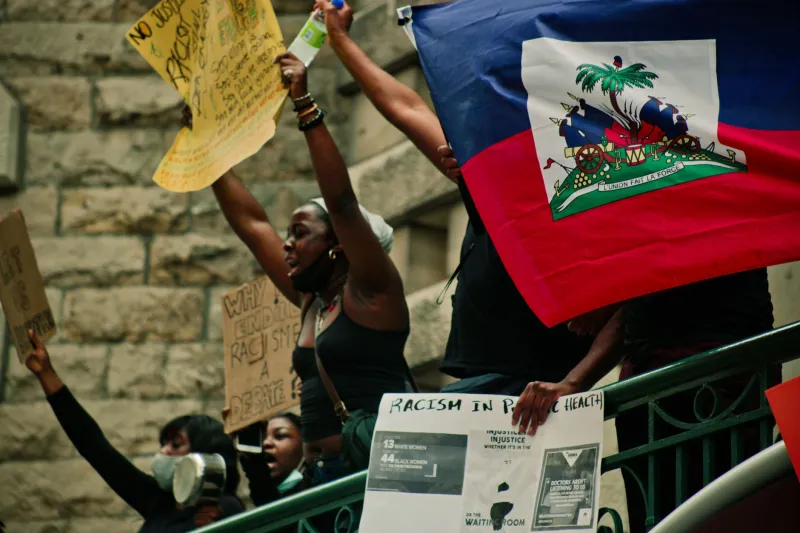
This is the environment in which the families of the Jena 6 fought. It is the environment in which countless other families — in Baton Rouge and Baltimore, in Chicago and Compton — continue to fight. The names change. The machinery does not.
Demanding Structural Accountability
Reform advocates have identified several concrete interventions that could begin to dismantle the plea bargain trap. Mandatory recording of plea colloquies, with independent review for voluntariness, would create accountability for coercive practices. Caseload caps for public defenders, enforced through funding requirements rather than aspirational guidelines, would restore the possibility of genuine advocacy. Pretrial detention reform — reducing the use of cash bail that keeps poor defendants incarcerated and desperate — would remove one of the most powerful levers prosecutors use to compel guilty pleas.
Beyond these structural reforms lies a cultural reckoning that the legal system has long resisted: the acknowledgment that efficiency and justice are not synonyms, and that a system which processes innocent people through guilty pleas has not achieved efficiency. It has achieved injustice at scale.
The Jena 6 case became a national inflection point because people refused to accept that the system's verdict was the final word. That same refusal — sustained, organized, and politically fearless — is what the plea bargain crisis demands. Every innocent person who signs a guilty plea under economic duress is a verdict that should be appealed. Every public defender's office that operates at four times its recommended caseload is a constitutional violation that should be litigated. Every prosecutor who exploits the trial penalty to coerce confessions is an official who should face public accountability.
Justice delayed is justice denied. But justice coerced — extracted through fear, poverty, and manufactured desperation — is something worse. It is justice's counterfeit, stamped with the court's seal and filed away as if it were the real thing.