Same System, Different Names: How America Keeps Criminalizing Its Black Children
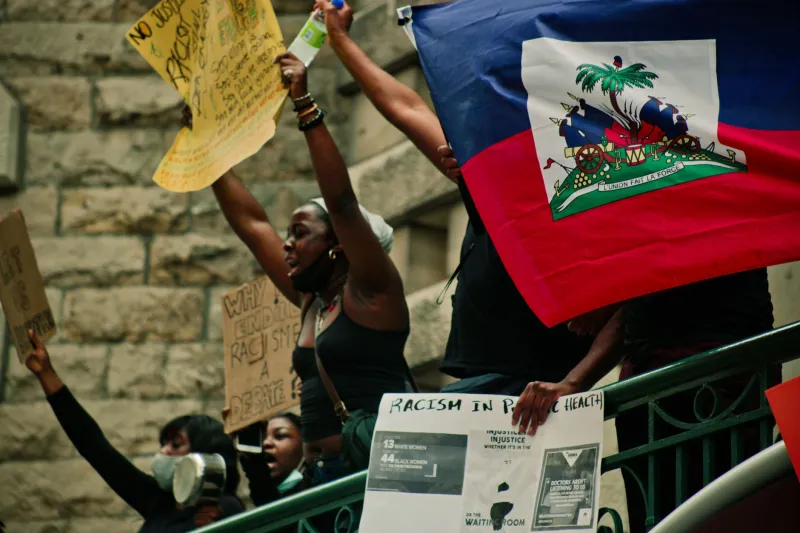
In the late summer of 2006, six Black teenagers in Jena, Louisiana, sat inside a courthouse facing charges that could have imprisoned them for decades — charges that grew, almost incomprehensibly, from a series of schoolyard confrontations rooted in racial hostility. The nooses hung from a tree. The school board did little. And yet, when the situation escalated, it was the Black students who faced the full force of prosecutorial power. Their names — Mychal Bell, Robert Bailey, Carwin Jones, Bryant Purvis, Jesse Ray Beard, and Theo Shaw — became a rallying cry for a generation of activists who recognized in Jena something far larger than one small Louisiana town.
What that generation understood, and what the years since have only confirmed, is that Jena was not an aberration. It was a template.
The Architecture of Over-Prosecution
To understand the continuity between the Jena 6 case and subsequent tragedies involving Black youth, one must first understand how the machinery of criminalization operates. It does not require explicit racial animus at every juncture, though that is often present. What it requires is a system of discretionary decisions — by police, by prosecutors, by school administrators, by juries — each of which, in isolation, might appear defensible, but which, in aggregate, produce outcomes that are strikingly and consistently racialized.
In Jena, District Attorney Reed Walters made a prosecutorial choice that stunned observers nationwide: charging teenagers involved in a schoolyard fight with attempted murder. The decision was discretionary. It was also, by any honest measure, disproportionate. That disproportion was not incidental. It was the point. The severity of the charge sent a message about whose behavior warranted containment, and whose safety warranted protection.
This same architecture appeared in 2012 when Trayvon Martin, a seventeen-year-old walking home in Sanford, Florida, was shot and killed by George Zimmerman. The system's discretion operated in reverse that time: rather than over-charging a Black youth, it declined to charge the man who killed one. Zimmerman was not arrested for forty-four days. The Sanford Police Department initially accepted his self-defense claim without meaningful investigation. The prosecutorial machinery that had moved so swiftly against the Jena 6 moved with remarkable sluggishness when the victim — not the perpetrator — was Black.
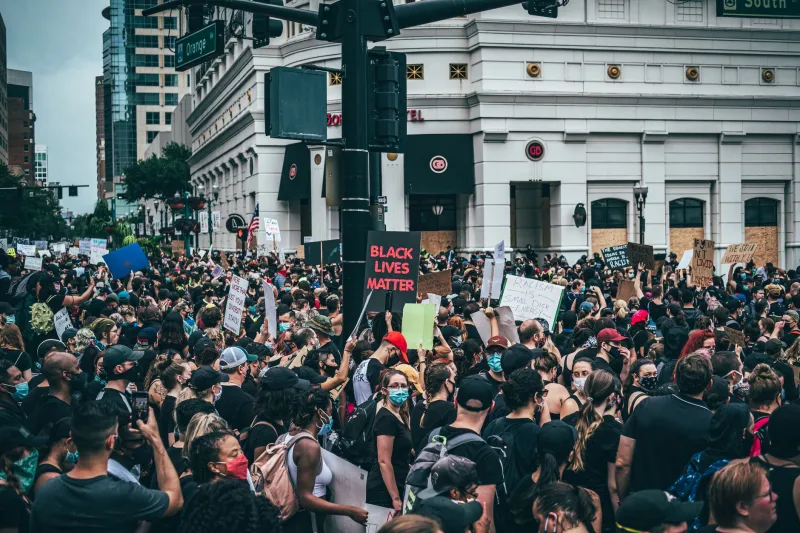
The asymmetry was not lost on the millions who took to social media under the banner of a movement that would soon declare, with unmistakable clarity, that Black lives matter.
Media Framing and the Construction of Threat
Across each of these landmark moments, media coverage has played a constitutive role — not merely reflecting public perception, but actively shaping who is seen as a threat, who is seen as a victim, and whose grief is considered legible to a national audience.
In Jena, early media coverage was sparse and, where it existed, often framed the story as a matter of local racial tension rather than systemic injustice. It took sustained organizing — including a march that drew tens of thousands to a town of fewer than three thousand — to compel national outlets to treat the case with the gravity it deserved. Even then, some coverage framed the protesters as the disruptive element, subtly centering white discomfort over Black suffering.
Trayvon Martin's case followed a familiar script. Early reports emphasized Zimmerman's account almost exclusively. Images chosen to represent Martin in initial coverage skewed toward photographs that made him appear older or more imposing than a slight teenager carrying iced tea and candy. The phrase "no angels" became a quiet refrain in coverage of Black youth whose deaths warranted scrutiny — a rhetorical device that asked the public to weigh a child's imperfections against his right to survive.
By the time Tyre Nichols was beaten to death by Memphis police officers in January 2023, the media landscape had shifted considerably. Bodycam footage was released within days. The officers — five of them Black — were charged with second-degree murder within weeks. Commentators rushed to declare that the swift accountability demonstrated progress, that the system had worked. And yet Tyre Nichols was still dead. His mother still wept on camera. And the deeper structural conditions that produced his killing — aggressive street-crime units, a culture of police violence normalized through training and institutional tolerance, the devaluation of Black life embedded in enforcement priorities — remained largely intact.
Community Response and the Limits of Visibility
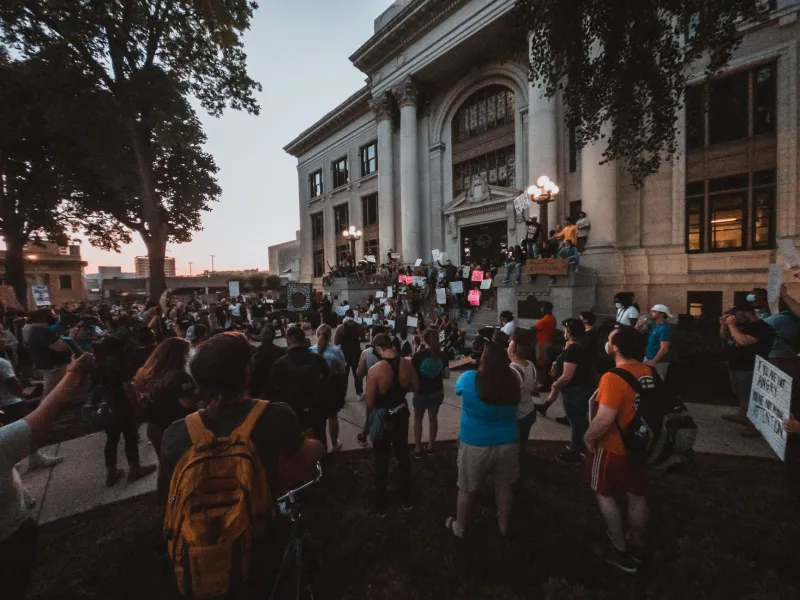
One of the most significant evolutions across these cases has been the speed and sophistication of community response. In 2006, the mobilization around the Jena 6 relied heavily on Black radio, early internet organizing, and word-of-mouth networks that bypassed a largely indifferent mainstream press. It was a remarkable display of grassroots power. It also revealed how much labor Black communities are required to expend simply to make their pain visible.
By the time of Trayvon Martin's death, social media had transformed the velocity of that labor. A petition demanding Zimmerman's arrest gathered over two million signatures within weeks. The hashtag became an organizing tool, a memorial, and a form of collective testimony all at once. The movement it helped birth reshaped American political discourse in ways that are still unfolding.
And yet visibility, however hard-won, has proven insufficient. Each viral moment of grief and outrage has been followed by a period of institutional recalibration — modest reforms, carefully worded statements, task forces whose recommendations gather dust — and then, reliably, another name. Another family. Another march.
The Blueprint Must Be Dismantled, Not Simply Documented
The throughline connecting the Jena 6 to Trayvon Martin to Tyre Nichols is not a matter of coincidence or isolated failure. It is the product of a legal and social infrastructure that has never been fully reckoned with: prosecutorial discretion exercised without accountability, policing philosophies that treat Black neighborhoods as occupied territory, school discipline regimes that funnel Black children toward the criminal legal system rather than toward opportunity, and a media culture that struggles to extend full humanity to Black youth unless their suffering reaches a threshold of spectacle.
The Jena 6 case mattered — and still matters — because it offered one of the clearest early illustrations of this infrastructure in action. It showed how a single over-zealous charging decision could destroy young lives. It showed how community organizing could move mountains when institutions would not. And it showed, with painful clarity, that justice delayed is not merely inconvenient — it is itself a form of punishment visited upon those who were never meant to win.
To free the Jena 6, in the fullest sense of that phrase, was always to demand more than the release of six specific young men. It was to demand the dismantling of the system that put them there — a system that, a generation later, is still very much at work.
Until that system is dismantled, we will keep learning new names. And the thread will hold.