When a Schoolyard Becomes Sacred Ground: How Local Injustice Ignites National Movements
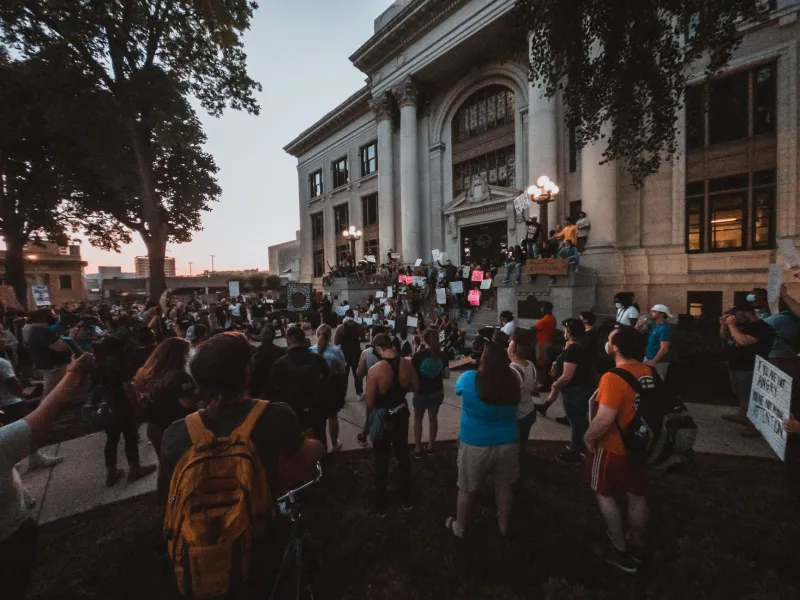
In September 2007, somewhere between fifty thousand and sixty thousand people descended upon a small central Louisiana town that most Americans had never heard of. They came by chartered bus, by carpool, by foot — teachers and ministers, college students and grandmothers, veterans of the Civil Rights Movement and teenagers who had never attended a single protest. They came because six Black high school students faced charges so disproportionate, so nakedly racialized, that silence felt like complicity. What happened in Jena did not stay in Jena. It became a reckoning — and that transformation did not occur by accident.
Understanding how a localized injustice metastasizes into a nationwide moral crisis is not merely an exercise in political history. It is a practical manual for every organizer working today to dismantle a criminal justice system that continues to treat Black lives as expendable.
The Anatomy of a Flashpoint
Not every injustice becomes a movement. The United States has a long, sorrowful inventory of racial atrocities that were absorbed quietly into the national conscience, mourned privately, and ultimately left unremedied. What distinguished the Jena 6 case — and, years later, the killing of Trayvon Martin — was a convergence of specific, replicable conditions.
First, there was clarity of narrative. The sequence of events in Jena had a brutal simplicity that cut through the noise of competing political messaging. White students hung nooses from a schoolyard tree after Black students dared to sit beneath it. School administrators dismissed the act as a prank. Racially charged confrontations followed. And then the state — through its prosecutorial apparatus — responded not by protecting the Black students who had been terrorized, but by charging them with attempted murder for a schoolyard fight. That inversion of justice, the powerful shielded while the vulnerable are prosecuted, is a story Americans recognize in their bones, even when they are reluctant to name it.
Second, there was the amplification effect of a media ecosystem in transition. The mainstream press was slow to cover Jena. It was Black radio hosts, bloggers, and early social media networks that forced the story into the national conversation. Color of Change, then a nascent digital advocacy organization, mobilized hundreds of thousands of petition signatures within weeks. This pattern — grassroots digital organizing compelling reluctant institutional media to pay attention — would repeat itself with remarkable consistency in the years that followed.
The Organizational Infrastructure That Made It Possible
Marches do not organize themselves. The September 20th rally in Jena was the visible summit of an organizational iceberg whose base had been constructed over months by civil rights attorneys, local community leaders, national figures including the Reverend Al Sharpton and Martin Luther King III, and a distributed network of ordinary citizens who had decided that this particular moment demanded their physical presence.
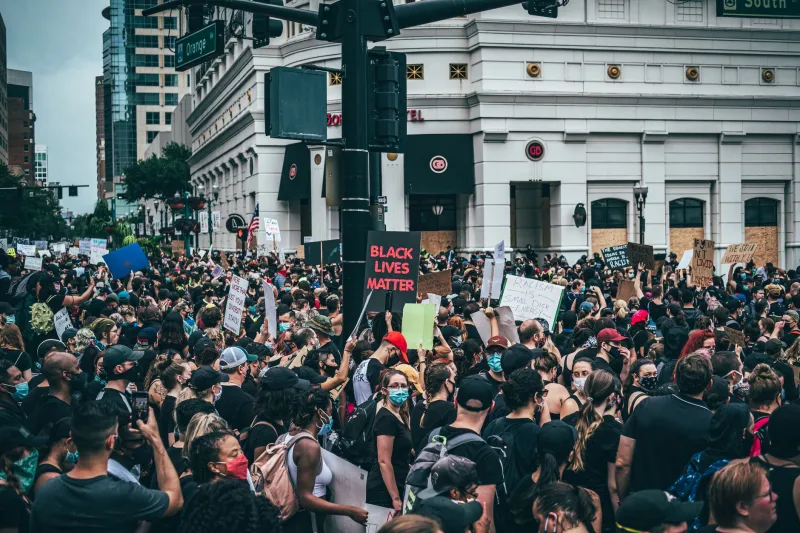
What that infrastructure demonstrated was the continued relevance of embodied solidarity. A petition, however large its signature count, does not produce the same political and psychological effect as tens of thousands of bodies occupying the streets of a town that had presumed its injustices would remain invisible. The march on Jena communicated something that no press release could: that the community of people who refused to accept this verdict was not virtual, not abstract, but flesh and blood and morally immovable.
Equally significant was the intergenerational character of the coalition. Veterans of the 1960s freedom struggle stood alongside young people for whom the Civil Rights Movement was history rather than memory. That continuity — the visible passing of a torch — imbued the Jena protests with a gravity that purely youth-driven or purely elder-led movements sometimes struggle to achieve.
From Jena to Sanford: The Pattern Repeats
When George Zimmerman shot Trayvon Martin in February 2012 and local police initially declined to make an arrest, the conditions that had animated the Jena protests reasserted themselves with devastating familiarity. Once again, a Black life had been taken or imperiled. Once again, the institutions charged with delivering justice appeared to be looking the other way. Once again, digital organizing — this time on platforms that had grown exponentially since 2007 — forced a reluctant system to respond.
The Jena 6 protests had, in a very real sense, trained a generation of organizers. The tactics, the coalition-building models, the understanding of how to leverage media pressure — these were not reinvented in 2012. They were inherited, refined, and deployed with greater sophistication. The movement that eventually coalesced around Trayvon Martin's death, and that gave rise to the phrase Black Lives Matter following the acquittal of his killer, drew from an organizational lineage that ran directly through that Louisiana schoolyard.
This is not coincidence. It is the compound interest of sustained movement-building.
What Transforms Grief Into Pressure
Activists sometimes speak of a "moment" as though cultural flashpoints are meteorological events — unpredictable, uncontrollable, merely to be survived or seized. The evidence suggests otherwise. Flashpoints are cultivated. They require, at minimum, four elements working in concert: a narrative clear enough to be understood and retold; an organizational infrastructure capable of mobilizing bodies and resources; a media strategy that does not wait for institutional permission to tell the story; and a moral framework that connects the specific injustice to a broader, widely shared set of values.
The Jena 6 case satisfied all four conditions. So did the Trayvon Martin case. So did the cases that followed. The question for today's organizers is not whether those conditions will arise again — they will, because the structural inequities that produce them remain intact — but whether the infrastructure will be ready when they do.
A Framework for Sustaining the Pressure
The most significant lesson of the Jena-to-present arc is that episodic mobilization, however powerful in the moment, is insufficient on its own. The charges against the Jena 6 were ultimately reduced or dismissed, a genuine victory. But the conditions that produced those charges — a criminal justice system that treats prosecutorial discretion as a tool of racial control, that extends leniency to some and maximizes punishment for others along racial lines — those conditions persisted.
Sustaining pressure requires moving beyond the rally and into the architecture of policy. That means investing in local district attorney races, where prosecutorial culture is actually shaped. It means building legal defense funds that do not dissolve between crises. It means maintaining the digital organizing infrastructure not only when a case is hot, but in the quieter intervals when the cameras have moved on.
Most importantly, it means treating every local injustice as a potential national reckoning — not because every case will become one, but because the discipline of organizing as though it might is precisely what ensures that when the moment arrives, the movement is ready.
The tree in the Jena schoolyard is gone now. But what grew from the outrage it provoked is still taking root. The work of ensuring that growth continues — methodically, strategically, without illusion — is the work of this generation.