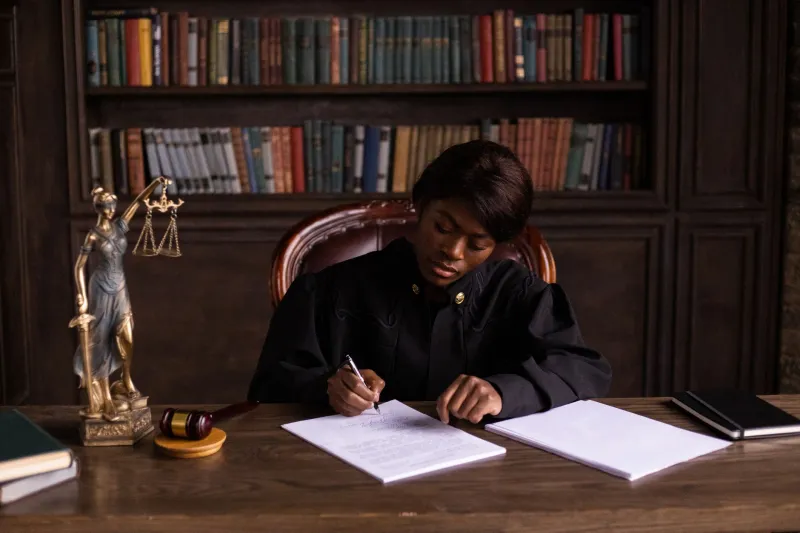
Truth Returned Too Late: When Witnesses Recant and Courts Refuse to Listen
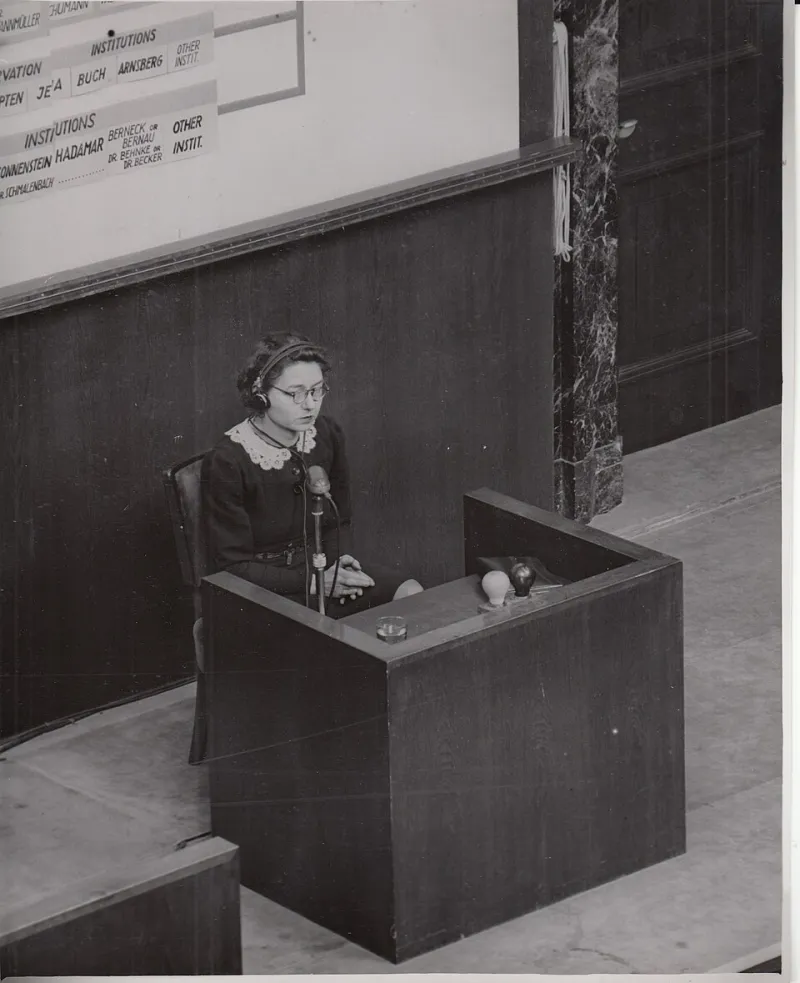
Photo: OMGUS Military Tribunal, Public domain, via Wikimedia Commons
Imagine spending a decade in prison for a crime you did not commit. Then imagine that the person whose testimony put you there contacts your attorney, signs an affidavit, and states clearly, under penalty of perjury, that they lied. The lie, they explain, was extracted under pressure — by a detective who implied cooperation would protect them, by a prosecutor who framed the testimony they wanted and waited for agreement, by a system that needed a conviction more than it needed the truth.
Now imagine a judge reading that affidavit and deciding it does not matter.
This is not a hypothetical. It is a recurring feature of post-conviction proceedings across the United States, documented in case after case by organizations including the Innocence Project, the National Registry of Exonerations, and the Equal Justice Initiative. Witness recantation — one of the most direct forms of evidence that a conviction rested on false testimony — is treated by American courts with a degree of institutional suspicion that borders on willful blindness.
The Doctrine of Finality and Its Human Cost
To understand why courts resist recantations, one must understand the doctrine of finality — the legal principle that holds, at its core, that convictions must eventually become permanent in order for the justice system to function. Without some degree of finality, the argument goes, every conviction would be perpetually vulnerable to challenge, witnesses would have no incentive to testify truthfully in the first place, and the entire machinery of criminal adjudication would grind to a halt.
There is a kernel of legitimate concern here. Recantations can be fabricated. Witnesses can be pressured, bribed, or manipulated into withdrawing testimony by defendants or their associates. Courts are right to approach any new evidence skeptically.
But the doctrine of finality, as applied in practice, has metastasized far beyond this reasonable concern. It has become a nearly impenetrable shield against any post-conviction challenge to witness testimony, regardless of the strength of the recantation, regardless of corroborating evidence of coercion, and regardless of the manifest injustice of leaving an innocent person incarcerated. Finality has become more important than accuracy. The system's need to believe it got it right has superseded its obligation to correct itself when it did not.
How Coerced Testimony Enters the Record
The problem does not begin with recantation. It begins with the conditions under which original testimony is obtained.
Research on false confessions and coerced witness testimony reveals a consistent set of pressure points: extended interrogations without counsel, implicit or explicit promises of leniency in exchange for cooperation, leading questions that shape the testimony before it is formally given, and the particular vulnerability of young witnesses, witnesses with cognitive limitations, and witnesses who themselves face criminal exposure. In communities that have been subjected to aggressive policing — communities that look, in many cases, like Jena, Louisiana — the pressure to cooperate with prosecutors can be immense and the consequences of refusal severe.
The testimony that emerges from these conditions enters the courtroom laundered of its origins. A jury hears confident, direct accusation. It does not hear the hours of interrogation that preceded it. It does not hear the promises made or the threats implied. It does not hear the witness's own uncertainty, suppressed by a system that needed clarity more than it needed accuracy. And when that witness later comes forward to tell the fuller truth, the court that hears the recantation does not see a correction. It sees a disruption.
Cases That Haunt the Record
The National Registry of Exonerations has identified perjury or false accusation as a contributing factor in more than half of all documented wrongful conviction cases. In a substantial number of those cases, recantation was offered — and rejected — before exoneration was finally achieved through other means, often DNA evidence.
The pattern is damning. Courts that would readily grant a new trial based on newly discovered physical evidence routinely deny the same relief when the new evidence is testimonial. A recanting witness is treated as less reliable than the original testimony, even when the recantation is detailed, consistent, corroborated, and accompanied by a credible account of the original coercion. The asymmetry is not accidental. It reflects a system that has more confidence in its own prior judgments than in the human beings whose words it used to render them.
In cases involving Black defendants and cross-racial identification — a category that encompasses a disproportionate share of wrongful convictions — the stakes are compounded by decades of social science research documenting the unreliability of cross-racial eyewitness identification. Courts have been slow to incorporate this research into their evaluation of recantations, leaving intact convictions that rest on a foundation that the scientific community has thoroughly discredited.
The Standard That Stacks the Deck
Most states apply what is known as the "newly discovered evidence" standard to post-conviction claims based on recantation. Under this standard, a defendant seeking a new trial on the basis of a recanting witness must demonstrate not only that the recantation is credible but that the result of the original trial probably would have been different had the true testimony been presented.
This standard is far more demanding than it sounds. In practice, it requires a defendant to prove a counterfactual — what a jury might have decided in a proceeding that never occurred — while relying on a legal system that is institutionally motivated to conclude that the original verdict was correct. Judges who apply this standard are being asked to find that their predecessors, or in some cases they themselves, presided over a proceeding that produced an unjust result. The psychological and institutional pressure against such a finding is immense.
The result is a standard that functions not as a genuine inquiry into truth but as a procedural mechanism for preserving convictions. It is calibrated to fail.
Building a System That Welcomes the Truth
Reform must begin with an honest acknowledgment that the current framework for evaluating recantations is designed, whether intentionally or not, to minimize their impact. States should adopt legislation requiring independent judicial panels — insulated from the institutional pressures of the original prosecution — to evaluate recantation claims. These panels should be empowered to conduct genuine factual hearings, including examination of the original interrogation records, any promises or benefits extended to the recanting witness, and the full history of the witness's relationship with law enforcement.
Prosecutors' offices must also be held accountable when it emerges that testimony was secured through coercion or misrepresentation. The current near-total immunity enjoyed by prosecutors for conduct in the course of obtaining convictions is a structural incentive for the very misconduct that produces false testimony in the first place.
When a witness comes forward to tell the truth, the law should be organized to hear it. Every day that it is not, someone is sitting in a cell that the truth could unlock — if only the system were willing to turn the key.